2027 SSDI and SSI Payments After the 3.6% COLA: What Changes in Midlife
The 3.6% cost-of-living adjustment lifts SSDI and SSI in 2027, but the Medicare premium and work limits decide what you keep.
 01 / Benefits · Explainer
In this story 8 sections
The 2027 cost-of-living adjustment is 3.6 percent. Disability (SSDI) payments rise in January, and SSI payments rise on December 31. The average disabled worker's monthly benefit goes from $1,642 to $1,701. The SSI federal rate for one person goes from $994 to $1,029. A higher Medicare Part B premium can take back part of that gain.
Simply Forties covers the money decisions that land in your forties and fifties, and disability benefits are one of them. This guide is for adults aged 40 to 58 who get SSDI or SSI, are applying for either, or help a partner or parent who does. It covers the 2027 payment figures, the work limits, and the health-cost change that can shrink the raise.
It does not cover retirement benefits. Those follow different rules, so check the retirement pages at the Social Security Administration (SSA) if that is your question.
What does the 2027 COLA change for SSDI and SSI payments?
Both programs get the same 3.6 percent increase. SSDI payments rise in January 2027, and SSI payments arrive earlier, on December 31, 2026, according to the SSA. The agency says the increase reaches about 7.3 million people on SSI and nearly 72 million Social Security beneficiaries overall.
The figure is not a guess or a policy choice. The Social Security Administration's October 14 announcement explains that it follows a federal inflation measure, the Consumer Price Index for Urban Wage Earners and Clerical Workers (CPI-W), tracked by the Bureau of Labor Statistics. Prices rose, so payments rise to match.
Your own raise depends on your own payment. A 3.6 percent increase on a $1,642 check is about $59. On a $2,400 check it is about $86. The averages are useful for planning, but your notice is the number that counts.
How do SSDI and SSI differ for people in their forties and fifties?
The two programs look alike on a notice but work differently. SSDI is an earned benefit. You qualify through your work history, and your payment reflects your past earnings. SSI is a needs-based program for people with limited income and few assets, whatever their work record.
Work credits are the SSDI gatekeeper. The SSA counts earnings in "quarters of coverage," and in 2027 one quarter requires $1,970 in earnings, up from $1,890 in 2026. Someone who spent twenty years in work and then became disabled at 52 usually has the history. Someone who spent years caring for family may not.
Some people get both, which is why the two sets of figures in the table below sit side by side. If your SSDI payment is small, SSI may top it up, subject to its income and resource rules. That mix changes the arithmetic, so ask the SSA how your case is treated.
How much will SSI and SSDI pay in 2027?
The SSA's 2027 COLA fact sheet lists the figures. SSI is a means-tested program, so it pays a flat federal rate and then reduces it as other income comes in. SSDI is tied to your past work record, so amounts vary widely.
| Item | 2026 | 2027 |
|---|---|---|
| SSI federal rate, one person | $994 | $1,029 |
| SSI federal rate, couple | $1,491 | $1,544 |
| SSI resource limit, one person | $2,000 | $2,000 |
| Average disabled worker (SSDI) | $1,642 | $1,701 |
| Disabled worker, spouse and children | $2,970 | $3,077 |
The SSI resource limit is the one that surprises people. It stays at $2,000 for one person and $3,000 for a couple. That limit does not rise with inflation, so savings above it can still affect eligibility even in a year when the payment goes up.
Housing is where these numbers get tight. Our look at HUD fair market rents for FY2027 explains the rent benchmarks HUD set for FY2027, a useful yardstick to hold against a $1,029 payment.
What are the 2027 work limits for people on disability?
Many people in their forties and fifties can do some work, and worry that any paycheck will end their benefits. The rules are specific. For SSDI, the key number is "substantial gainful activity" (SGA), the monthly earnings level that the SSA treats as proof you can work.
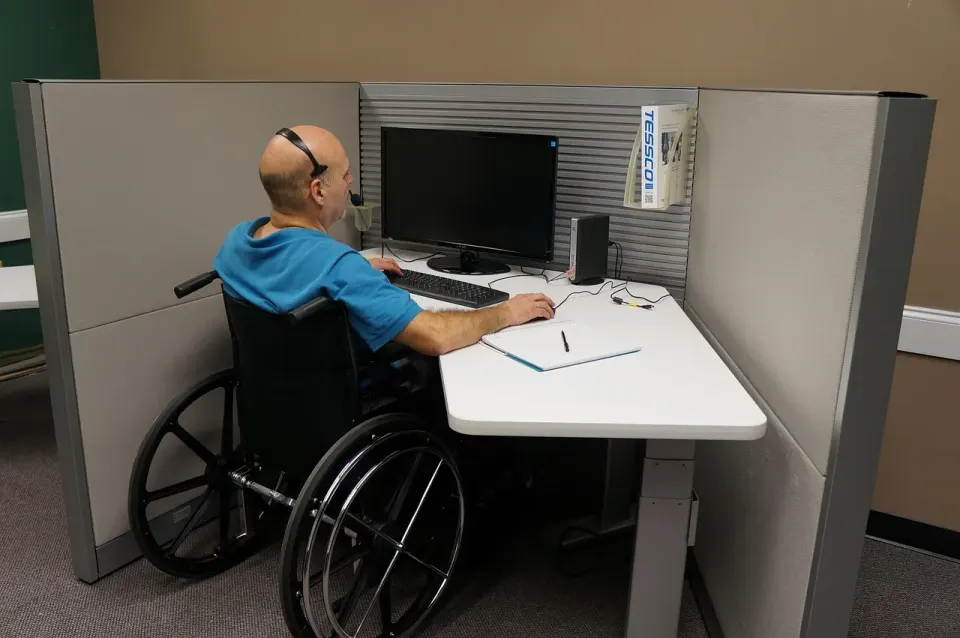
In 2027, the SGA limit is $1,770 a month for non-blind claimants, up from $1,690. For people who are blind, it is $2,950. The trial work period (TWP) threshold, which lets you test a job without losing benefits right away, rises from $1,210 to $1,270 a month.
These limits matter most if you are weighing a part-time job. At Simply Forties, we suggest writing down your expected monthly earnings before you accept an offer, and comparing them with the two figures above. Then call the SSA or a benefits counselor before the first shift, not after the first paycheck.
If the bigger question is what kind of work might suit you, the October 2026 jobs report breakdown looks at what recent hiring numbers mean for a career change at 45.
How can Medicare Part B shrink your 2027 raise?
People who have been on SSDI long enough usually qualify for Medicare. If you are one of them, the standard Part B premium comes out of your benefit before the money reaches you. That is why a raise on paper is not always a raise in your account.

The Centers for Medicare & Medicaid Services (CMS) says the 2027 standard Part B premium is $209.40 a month, up $6.50 from $202.90. The Part B deductible rises $9 to $292. The agency ties the increase mainly to projected growth in healthcare spending.
Here is a worked example using the SSA's average disabled-worker figures. In 2026, $1,642 minus $202.90 leaves $1,439.10. In 2027, $1,701 minus $209.40 leaves $1,491.60. The real gain is $52.50 a month, not $59.
Hospital costs move too. CMS puts the 2027 Part A inpatient deductible at $1,776, up $40 from $1,736. About 99 percent of beneficiaries pay no Part A premium, because they have at least 40 quarters of covered work. The deductible matters if you are admitted, so keep a small cushion for it.
The Part B change is still a raise, but a smaller one. It also shows why the premium line on your notice deserves as much attention as the headline percentage. If you are choosing between Medicare options for next year, our guide to a Medicare Advantage plan ending in 2027 walks through the deadlines.
What should you check before the January payment?
A short checklist keeps surprises small. Work through these steps in order, and keep the notices in one folder.

- Open your COLA notice. The SSA says people with a personal my Social Security account can view it online starting in late November, and everyone else gets a mailed notice in December.
- Find your new gross amount, then the Medicare premium line, then the net deposit.
- Update your monthly budget with the net figure, not the gross one.
- If you also receive SSI, check that the payment lands on December 31 and plan for the gap between that date and your next bill.
- Look at your savings balance against the $2,000 SSI resource limit before the year ends.
- Write down any work earnings so far this year, and compare them with the $1,770 SGA figure.
Rules differ by situation, and some people have other income, a spouse's income, or a different Medicare arrangement. A free benefits counselor or legal aid office can check your own file. The SSA's own offices can confirm what is on record.
Does the raise keep up with real costs?
It helps, but it does not close every gap. A 3.6 percent COLA responds to last year's price increases, so costs you already absorbed stay absorbed. Rent, food and health costs tend to rise faster than the average basket for people on fixed incomes.
That is a fair counterpoint to the good news. The raise is real, and it is automatic, but it is a catch-up measure. Anyone living close to the edge should treat it as a small cushion rather than a fix, and should look at whether other programs, such as housing help, are available in their area.
Our own reading of the figures at Simply Forties is that the SSI resource limit is the number most worth watching. It has not moved, and it quietly decides who stays eligible.
The practical answer for 2027
The 2027 COLA is 3.6 percent, and it lifts both SSDI and SSI. The average disabled worker gains $59 a month before Medicare, and about $52.50 after the higher Part B premium. SSI for one person reaches $1,029. The work limits rise too, with SGA at $1,770 for non-blind claimants.
Your next step is simple. Open your notice when it arrives, update your budget with the net figure, and check your savings against the $2,000 SSI limit. If anything on the notice looks wrong, contact the SSA promptly and ask for a written explanation.
Fact-checked against SSA and CMS figures as of November 26, 2026. This article is general information, not personal advice.
When will the 2027 SSI increase show up in my account?
How much is the average SSDI payment after the 2027 COLA?
What is the most I can earn without losing SSDI in 2027?
Does the 2027 COLA change the SSI savings limit?
Why is my net check smaller than the raise I expected?
Some links may be sponsored. Our editors choose what we cover, and nothing here is financial, legal or benefits advice. Our editorial policy.
In this story 8 sections
Keep reading

- 01 / Benefits · Explainer SNAP Work Requirements at 55 to 64: What Changed in 2026 8 min read
- 01 / Benefits · Explainer Employer Health Costs in 2027: How to Choose Your Open Enrollment Plan in Your 40s and 50s 7 min read
- 01 / Benefits · Explainer Medicare Advantage Plan Ending in 2027: What to Do Before December 7 7 min read