Medicare Part B Premium 2027: What $209.40 a Month Means Before You Turn 65
The 2027 Part B premium is $209.40 a month, and your income at 62 or 63 can raise it through IRMAA.
 03 / Retirement money · Explainer
In this story 9 sections
The standard Medicare Part B premium will be $209.40 a month in 2027, up $6.50 from 2026, and the yearly deductible rises to $292. Higher earners pay more through IRMAA, a surcharge based on your tax return from two years earlier. If you are in your 50s, your income at 62 or 63 can set your first premium.
Medicare feels far away at 48 or 55. Yet the Part B premium is one of the few retirement costs with a published price, and the rule that raises it looks backward at your income. This guide is for readers in their 40s and 50s who want to plan early, and for anyone retiring before 65 who needs to know what the Medicare Part B premium in 2027 looks like. Simply Forties covers the benefits side of midlife money, and this article sticks to the numbers that matter.
What Are the Medicare Part B Costs for 2027?
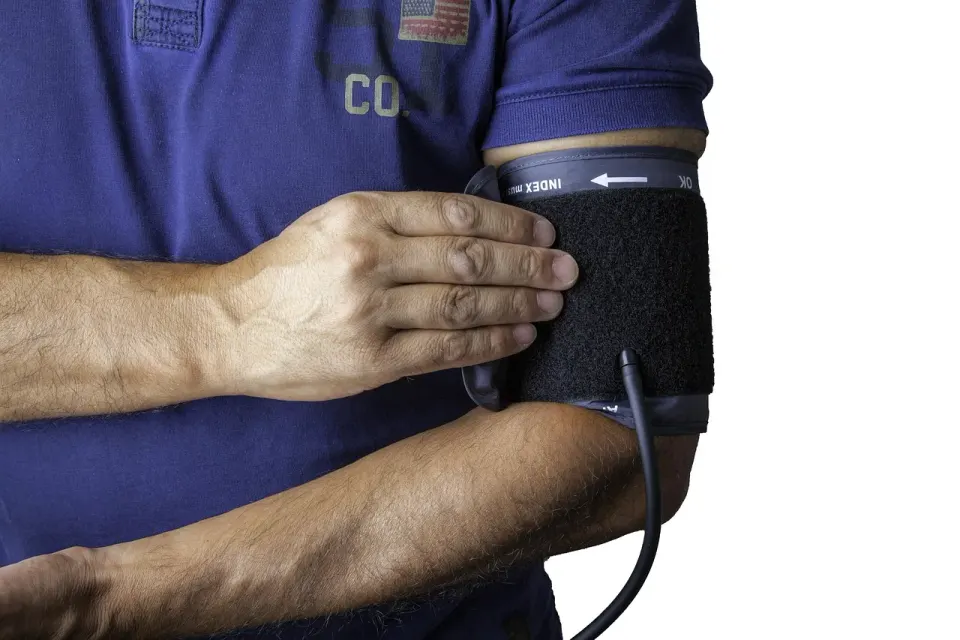
Part B costs for 2027 are a $209.40 monthly premium and a $292 annual deductible. The Centers for Medicare & Medicaid Services (CMS) announced both figures on November 17, 2026. You pay the deductible first, then a share of each bill.
The CMS fact sheet on 2027 Medicare Parts A and B premiums says the rise comes mainly from projected growth in healthcare spending. The premium climbs 3.2 percent. Over a full year, one person pays $2,512.80 for Part B alone.
| Cost | 2026 | 2027 |
|---|---|---|
| Part B standard premium (monthly) | $202.90 | $209.40 |
| Part B deductible (yearly) | $283 | $292 |
| Part A hospital deductible (per benefit period) | $1,736 | $1,776 |
Think of Part B as the plan for everyday medical care. CMS describes it as coverage for physicians' services, outpatient hospital care, durable medical equipment and some home health services. A knee scan, a cardiology visit and a walker all fall under it. That is why almost every enrollee keeps it, and why the premium is hard to avoid.
Most people pay nothing for Part A. CMS says about 99 percent of beneficiaries have the 40 quarters of work history that makes it premium-free. Part B is the bill that nearly everyone sees.
How Does IRMAA Raise Your Part B Premium?
IRMAA stands for income-related monthly adjustment amount. It is a surcharge added to the Part B premium when your modified adjusted gross income (MAGI) passes a set line. CMS says it affects roughly 9 percent of people with Part B. Each bracket is a step, so one extra dollar of income can cost you hundreds.
The 2027 brackets for full Part B coverage, as published by CMS, are below.
| Single filers (MAGI) | Joint filers (MAGI) | Monthly extra | Total monthly premium |
|---|---|---|---|
| $112,000 or less | $224,000 or less | $0.00 | $209.40 |
| $112,001 to $141,000 | $224,001 to $282,000 | $83.70 | $293.10 |
| $141,001 to $177,000 | $282,001 to $354,000 | $209.40 | $418.80 |
| $177,001 to $212,000 | $354,001 to $424,000 | $335.00 | $544.40 |
| $212,001 to $499,999 | $424,001 to $749,999 | $460.60 | $670.00 |
| $500,000 or more | $750,000 or more | $502.40 | $711.80 |
The first step costs $1,004.40 a year per person. The top step costs $6,028.80 a year in extra charges. Most midlife households sit well below these lines. A one-time event can still push a single year over one.
Why Does Your Income at 63 Set the Premium at 65?

Social Security generally sets your IRMAA from the tax return filed two years before the premium year. For 2027, that means your 2025 return. Someone who turns 65 in 2027 is judged on income earned at 62 or 63. That is the quirk most people miss.
Plenty of midlife moves can lift MAGI in a single year. A Roth conversion adds the converted amount to taxable income. Selling a rental property or a large stock holding adds capital gains. A big 401(k) withdrawal does the same. Our guide to the Roth catch-up rule at 50 explains why high earners are moving more money into Roth accounts, and those same choices can raise MAGI in conversion years.
There is a fair counterpoint. A Roth conversion can cut your tax bill for decades, and a one-year IRMAA charge may be a price worth paying. Do the sum before you decide. A $20,000 conversion that moves a single filer from $100,000 to $120,000 of MAGI adds $83.70 a month, or $1,004.40 for the year. Compare that cost with the tax you expect to save later.
Simply Forties editors recommend checking your MAGI each year from age 60. Line up your income against the next bracket before you sell, convert or withdraw. This is general information, so a tax professional should review any large move.
Can You Lower an IRMAA Surcharge After Your Income Drops?
Yes, in some cases. Social Security lets you ask for a lower IRMAA after a life-changing event that cut your household income. The Social Security Administration (SSA) lists marriage, divorce, the death of a spouse, loss of income and an employer settlement payment as qualifying events.
The SSA page on requests to lower an IRMAA explains that you submit Form SSA-44 online, by fax or by mail. If you filed an amended tax return, you call SSA instead. Gather proof of the change first, such as a termination letter or a settlement statement.
This matters for career changers. A layoff at 62 can leave you with a high-income tax return from the year before and no paycheck now. Our piece on unemployment benefits after a layoff at 50 covers the first steps after losing a job, and the Medicare premium is one more item to flag later.
How Should You Budget for Part B in Your 40s and 50s?

Treat Part B as a fixed monthly line in your retirement budget. Start with $209.40 a month, or $418.80 for a couple. Then add room for yearly increases. At a steady 3 percent rise, $209.40 becomes about $281 after ten years. That is an illustration, not a forecast.
Couples should double the numbers. Two people on Part B pay $418.80 a month, which is $5,025.60 a year, plus a $292 deductible each. Each spouse is judged on the joint tax return, so one person's income can lift the bracket for both.
The cost-of-living adjustment (COLA) offers some cushion. The SSA announced a 3.6 percent benefit increase for 2027. For most beneficiaries, Medicare takes the Part B premium straight from the Social Security payment. A person with a $2,000 monthly benefit gets $72 more from the COLA and pays $6.50 more for Part B, so about $65.50 of the raise stays in hand. Our explainer on the 2027 Social Security COLA walks through the raise in more detail.
Part B is only one piece of the health bill. Drug costs, dental work and gaps in coverage sit outside it. Our guide to Medicare costs in 2027 and the Part D cap covers the rest of the budget. If you already have Medicare and your plan is ending, read what to do when a Medicare Advantage plan ends before the December deadline.
What If You Retire Before 65 and Need Health Coverage First?
Early retirees face two income tests, not one. Before 65, you may buy a plan on the ACA marketplace, and your income shapes any premium tax credit. After 65, your income shapes IRMAA. The same Roth conversion can raise both bills.
That overlap argues for planning MAGI as a single project. A low-income year at 60 may lower your marketplace premium. A high-income year at 63 may raise your first Medicare premium. Our look at ACA open enrollment in 2027 for shoppers in their 50s shows what to check on the marketplace side. Then use the IRMAA table above for the Medicare side.
Common IRMAA Mistakes to Avoid
Four errors come up again and again when people plan around the surcharge.
- Assuming this year's income sets this year's premium, when the return from two years ago does.
- Missing a bracket line by a small amount, since each step is a cliff and not a slope.
- Forgetting that tax-exempt interest counts toward MAGI for IRMAA purposes.
- Skipping Form SSA-44 after a job loss, divorce or other qualifying event.
None of these is hard to fix once you know it exists. The cost comes from finding out after the first bill arrives.
A Simple Checklist Before You Turn 65
These steps keep the Medicare Part B premium from surprising you.
- Find your MAGI on last year's tax return and note the distance to the next bracket.
- Flag any large Roth conversion, home sale or withdrawal planned for age 62 or 63.
- Spread big income events across several years where your tax adviser agrees.
- Save proof of any job loss, divorce or settlement that cuts your income.
- Add $209.40 per person per month to your retirement budget.
The Bottom Line on the 2027 Part B Premium
The Medicare Part B premium in 2027 is $209.40 a month, and the deductible is $292. Most midlife households will pay that standard rate. The risk sits in the lookback, because income at 62 or 63 can add up to $6,028.80 a year at the top bracket.
Start with your own MAGI and the bracket table above. Then time any big income events with care, and keep your paperwork if life changes. At Simply Forties, we check each figure here against the CMS fact sheet, and we will update this guide when new numbers are released.
How much is the Medicare Part B premium in 2027?
What income triggers the Medicare IRMAA surcharge in 2027?
Which tax year does Medicare use to set my 2027 premium?
Will the 2027 Social Security raise cover the Part B increase?
Some links may be sponsored. Our editors choose what we cover, and nothing here is financial, legal or benefits advice. Our editorial policy.
In this story 9 sections
Keep reading

- 03 / Retirement money · Explainer Saver's Match 2027: Who Qualifies for Up to $1,000 and How to Claim It 8 min read
- 03 / Retirement money · Explainer Social Security 2027 Changes for Workers in Their 40s and 50s: COLA, Work Credits and the Earnings Test 8 min read
- 03 / Retirement money · Explainer 401(k) Catch-Up Limits 2027: The Roth Rule and the Age 60 to 63 Boost 8 min read